Tech stack
Stop Calling Slow Reports a Data Problem
Hospitality keeps treating slow reporting like a dashboard issue. The truer problem is delayed decisions that land on the floor as harder shifts.
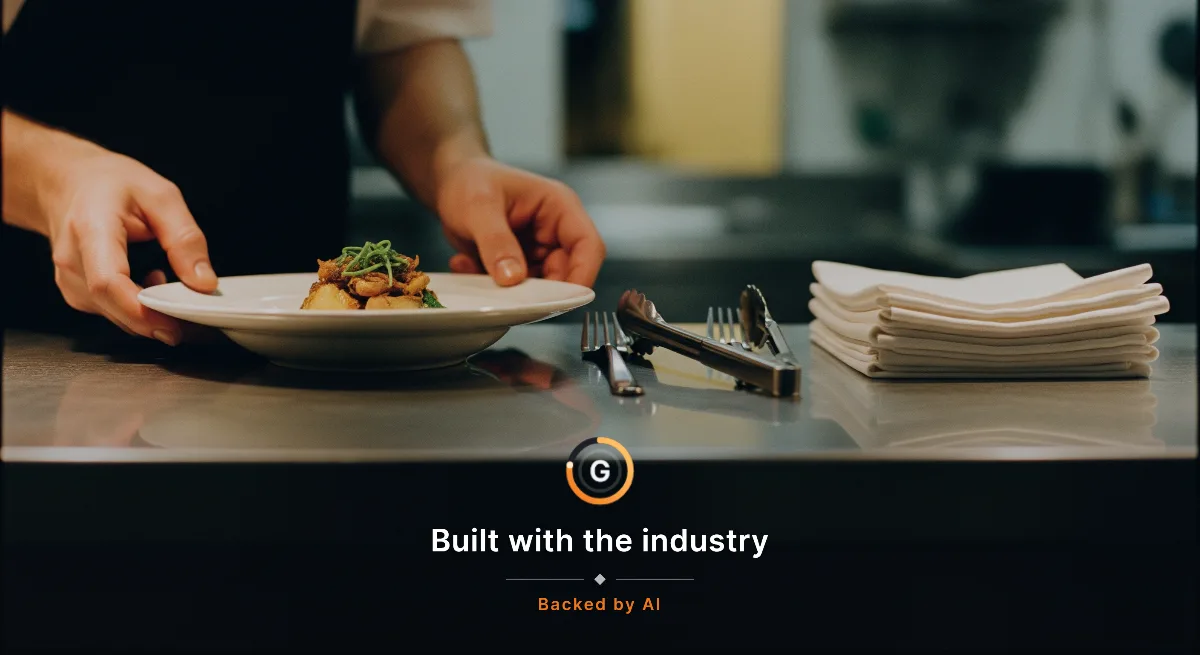
Before pre-shift, when the dining room is still dark and the floor has only the soft scrape of chairs being set down, a manager can see the room as a promise. Twenty seats near the window. A long bar. A pickup shelf. A narrow pass where two people will need to turn sideways all night.
That promise becomes a labor plan, a handoff plan, a guest-expectation plan, and eventually a very long Friday if the pieces do not match. The useful question is not whether restaurants are getting smaller or bigger. It is what kind of operation each footprint is asking people to run.
Restaurant size is a service model decision, not a trend to copy.
A recent piece in Modern Restaurant Management, drawing on RestaurantData’s review of 3,381 planned-growth location records, makes the point clearly: 2026 openings do not show one dominant prototype. Compact quick-service and fast-casual locations are growing alongside casual, family, and upscale restaurants with much larger dining rooms. That matters because “smaller box” has become a lazy shorthand, and shorthand can make expensive decisions sound settled before the work has been thought through.
The better move is to sort the signal. A new footprint can belong to one of three operating patterns. Do not act on the headline alone. Act on the pattern your own service is built to support.
This is the compact operation built around speed, repeatability, pickup, delivery, and a short guest dwell time. Fewer seats can make sense here, but only if the work can actually move. The constraint is rarely square footage by itself. It is the moment when orders arrive in three channels at once and one person is trying to greet, assemble, bag, answer a delivery-driver question, and keep the counter from feeling abandoned.
At 7:40 on a Friday, a small dining room can look efficient on a drawing and still feel punishing if the pickup point blocks the entrance or the expo surface holds six bags with nowhere safe to put the seventh. In this pattern, count the handoffs: order to line, line to expo, expo to guest or driver. If those handoffs cross, bottleneck, or require someone to shout, the issue is not that the restaurant is too small. It is that the service path has not been designed for its volume.
For a counter team member or cook, this distinction matters. You are not failing because the line gets tangled when every order has a different destination. The system has asked one station to carry too many decisions at once. A good opening plan gives the team a clear physical home for each order type before the doors open.
A larger room is not automatically indulgence. It can be the operating choice for a concept where people linger, celebrations take time, servers need room to recover a table, and guests judge the experience partly by whether they can settle in. But large rooms create their own obligations: longer sightlines, more steps, more sections to balance, more chances for a guest to wait unnoticed after the main course lands.
Here, the useful measure is not simply seats per square foot. It is service recovery distance. Can a server notice a water glass from the station? Can a manager reach a table with a concern before the guest has to wave? Can food runners get from the pass to the far corner without colliding with a birthday party gathering for photos?
A recent Toast analysis of restaurant turnover notes that turnover carries direct and indirect costs, including recruiting, training, and the operational drag of vacancies. In a large-format room, that drag often shows up first in the people covering the gaps: the server walking a section that was meant for two, the host trying to pace a floor with missing information, the manager running drinks instead of coaching the new hire. A bigger room needs a staffing model that respects the walking, scanning, and recovery work it creates.
This is where many operators get caught. The concept wants the warmth of a full-service room, the revenue of takeout, the speed of a counter, and the flexibility to host a private event. None of those aims is wrong. The trouble begins when each one borrows the same doorway, the same prep space, the same POS moment, and the same already-stretched person.
Mixed-mode operations need explicit priority rules. When a 12-top is seated at the same time as a delivery rush, who owns the guest at the door? Where do packaged orders wait without becoming invisible? When the bar is three deep, who confirms that the banquet captain has what they need? These are not minor details to solve through hustle. They are the daily operating model.
Gallup’s 2024 State of the Global Workplace reported that managers account for at least 70 percent of the variance in team engagement. In hospitality, that does not mean managers can personally absorb every flawed layout or unclear workflow. It means their ability to set priorities, make handoffs visible, and protect people from contradictory demands has a real effect on whether a shift feels survivable.
So sort the market signal before treating it as instruction. A compact opening is evidence of a throughput pattern somewhere. A large dining room is evidence of a dwell-time pattern somewhere. A hybrid concept is evidence that someone believes several revenue streams can coexist. None of those facts tells you what your own team can carry without a clean operating design.
That is the part worth holding onto after the plans, projections, and opening photos are put away. The room is never just the room. It determines who walks farther, who waits longer, who has to make the call when two needs arrive at once, and who gets blamed when the answer was never clear.
The right footprint is the one whose service demands your people can meet with clarity and dignity. Before the next expansion conversation, sit with one honest question: are we choosing space for the business we want to describe, or for the work our team can reliably do well?
Tech stack
Hospitality keeps treating slow reporting like a dashboard issue. The truer problem is delayed decisions that land on the floor as harder shifts.
Tech stack
Hotel tech debates usually stay in the CIO room. What matters on property is simpler: whether the PMS makes every handoff clearer, faster, and safer.
Tech stack
When reservation data lives in too many places, the host stand pays first. One clean system is not convenience, it is shift protection.