
Evaluations
What Guests Remember After the Survey Leaves the Inbox
Two operators get the same guest feedback. The one that answers with action, not collection, builds trust, steadier teams, and better repeat business.
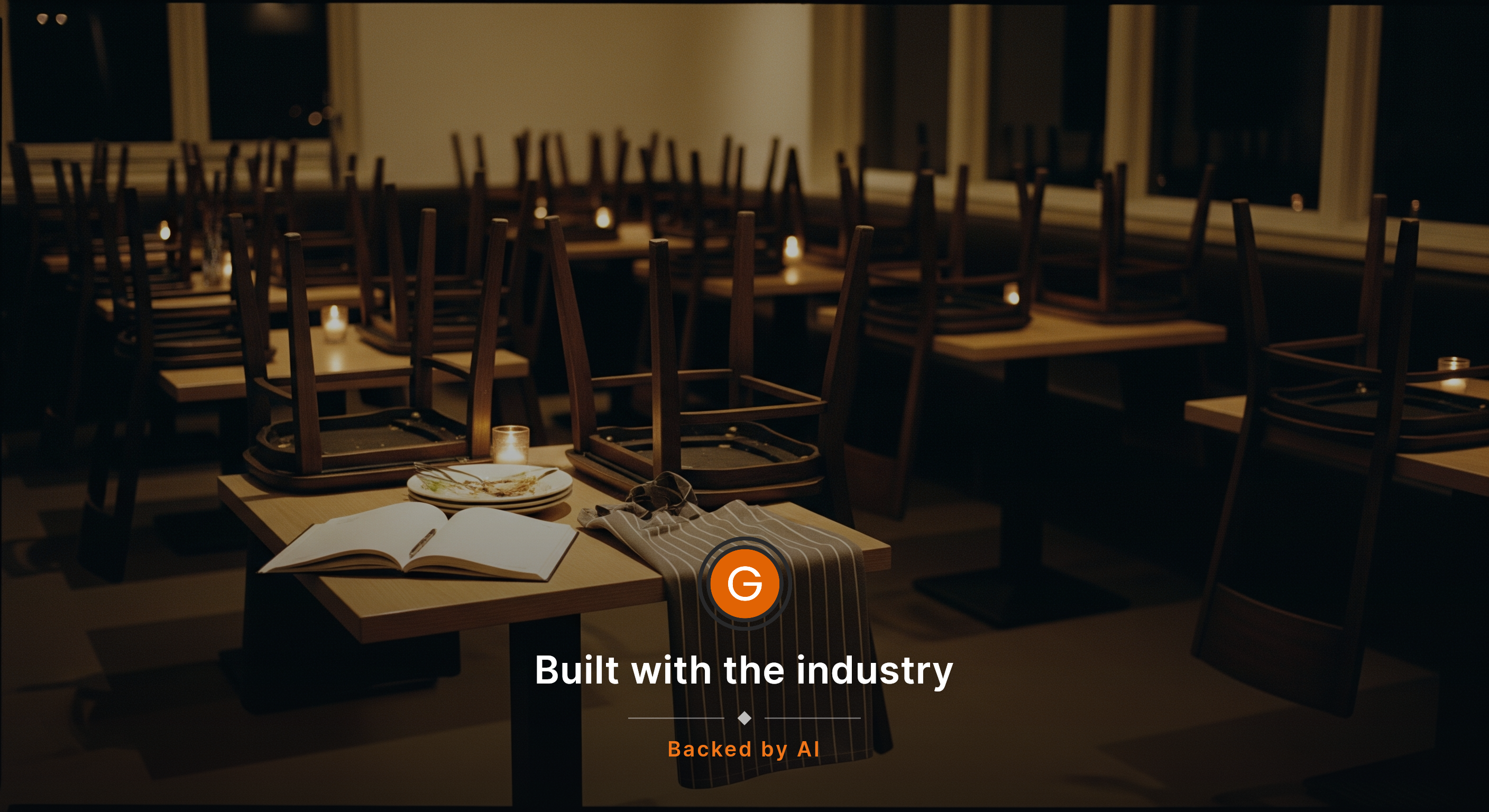
After lock-up, the room tells the truth differently. Chairs are up, the fryer is finally quiet, and the manager is standing with a pad trying to make sense of three bad comments, two no-shows this month, and a sales line that keeps coming in light on Tuesdays. None of it looks dramatic on its own. Together, it starts to feel like something is slipping.
More operators are being forced to separate a bad night from a bad pattern, and the difference matters more than pride wants to admit. A recent piece in Restaurant Dive reported that MTY Group's performance review identified 68 underperforming corporate locations across multiple brands, including plans to close up to 50 Papa Murphy's stores. Patterned feedback is operational feedback.
That is the part worth sitting with. The story is easy to read as a portfolio headline, a parent company trimming weak units. But on the floor, the useful question is smaller and harder, what counts as a signal serious enough to act on?
Most restaurants are swimming in messy feedback. A bartender says the new close is too rushed. A guest leaves a one-star review because the patio was cold in April. One server keeps getting dessert attachments and another does not. A lunch shift misses labor by four points because a storm never broke. If we treat every one-off like a diagnosis, we wear the team out chasing ghosts. If we ignore repeated misses because each one has an excuse, we wake up six months later calling a pattern a surprise.
So here is a cleaner way to sort it.
Incident is a one-off miss with a clear cause. The printer died. The fryer went down. The new host double-sat a section and learned from it. You fix it, document it if needed, and move on.
Drift is when the same kind of miss shows up again, but not yet enough to call it structural. Wait quotes stretch on Fridays. Side work starts getting sloppy after 9 p.m. The opener leaves a little more for the mid every week. Drift is the warning light. It is not a verdict, but it is not random either.
Pattern is repetition across time, people, or locations. Three different managers miss prep pars in the same daypart. Guest complaints cluster around the same handoff. Labor overruns keep coming from the same schedule shape. If six stores struggle with the same thing, it is probably not six separate character flaws. It is one operating problem wearing six name tags.
This is not just floor wisdom. Gallup's State of the Global Workplace report has repeatedly shown that managers account for 70 percent of the variance in team engagement, which means performance often reflects what the system is asking managers to carry, not just whether they care. And the U.S. Bureau of Labor Statistics JOLTS releases keep showing hospitality as one of the most churn-heavy parts of the economy, with accommodation and food services regularly posting some of the highest quit and separation rates in the market. In a trade with that much movement, messy feedback is guaranteed. Sorting it is the job.
What does this look like at restaurant level? Say one location is getting crushed on pickup times. If that store also has a brand-new kitchen lead, a busted expo shelf, and road construction killing access, that may still be an incident stack, painful but local. But if pickup times are slipping in four stores, all on the same menu daypart, after the same promo launch, that is a pattern. Stop coaching individuals first. Start reviewing menu complexity, quote logic, staffing model, and handoff steps.
Same with team feedback. If one line cook says, quietly after close, that the station setup makes no sense, hear it. If three cooks on different weeks all rebuild the same station before service, believe them faster. If one host freezes at a triple-seat, train the host. If every new host freezes at the same moment, redraw the seating rule and the support call.
The reason this matters is emotional as much as operational. Teams can handle hard. What burns people out is randomness. The shift changed three times this week. The closer got blamed for a handoff miss that started at pre-shift. The GM asks for feedback, then treats each comment like an isolated complaint instead of checking whether the same friction is echoing through the room. That is how good people start sounding checked out. Not because they stopped caring, but because the building keeps misreading the message.
For the line cook, the server, the host, the dishwasher holding the back half of the night together, this matters too. Not every ugly shift means the place is broken. One bad Saturday is just one bad Saturday. But if the same pain keeps landing on the same moments, open, handoff, first push, close, then what you are feeling is probably real and shareable. Name the repeat, not just the frustration. Say, this is the third Friday where the six o'clock cut leaves one section buried by seven-thirty. That helps a manager act on a pattern instead of defending against a mood.
For operators, the trap is speed. We are tempted to fix the loudest comment, the latest review, the single worst labor line, because it feels decisive. But evaluation gets cleaner when we count recurrence before we assign meaning. Toast made a related point in its restaurant labor reporting, that turnover and staffing strain are expensive not just because people leave, but because constant replacement erodes consistency in training and service execution. When the same miss survives multiple hires, it is rarely a hiring problem alone. It is the job design, the handoff, the training sequence, or the standard itself.
That is the sharper lesson under the MTY story. Closures do not begin when a company finally admits a location is weak. They begin much earlier, when repeated feedback gets treated like isolated weather instead of accumulated evidence.
Try this two-minute test tonight. Take the last frustrating thing you wanted to blame on a person, a bad review, a slow ticket stretch, a rough close, a host mistake. Then ask only two questions. Has this happened three times in the last 30 days, and has it shown up with more than one person or shift? If the answer is no to both, you may be looking at an incident. If the answer is yes to either, start looking for drift. If the answer is yes to both, stop calling it a one-off. Repeated feedback is not noise, it is the shape of the work telling on itself.
Evaluations
Two operators get the same guest feedback. The one that answers with action, not collection, builds trust, steadier teams, and better repeat business.

Evaluations
Customer reviews matter, but restaurants get in trouble when they treat every rating like a full diagnosis instead of a signal to inspect the floor.