Leadership
A CEO change only matters if the shift gets clearer
Leadership changes make headlines, but one number should guide decisions this quarter: managers shape most engagement variance, and the floor feels it fast.
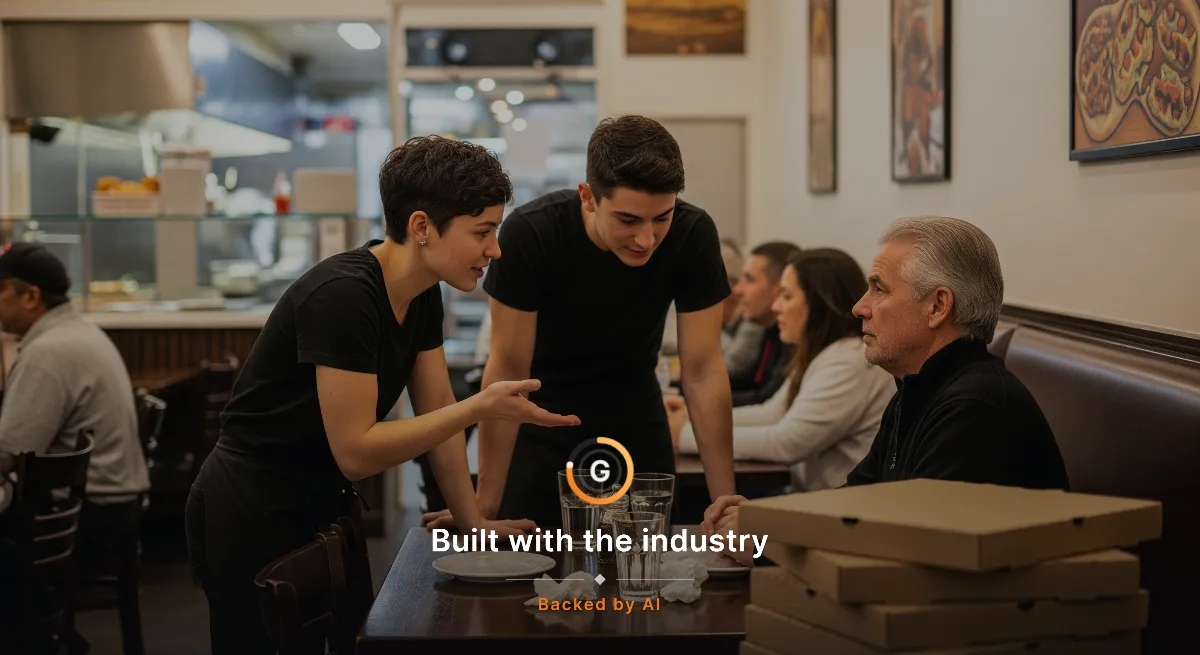
The regular noticed it before anyone said it out loud. He looked at the pizza box, then at the server, and asked whether the Tuesday offer had changed again, because last week it rang one way, this week it rang another, and the flyer he saw at home said something else.
The server did what good hospitality people do when the system gets messy. She smiled, bought a few seconds, and asked the manager to come over. By the time the table was settled, nobody had yelled and nobody had done anything wrong, but the room had still taken a hit. A simple dinner had turned into a small negotiation.
Leadership changes often show up to guests as confusion before they show up as growth. That is the part too many strategy conversations miss.
That is why a recent piece in Nation's Restaurant News matters beyond one brand. NRN reported that Papa Johns posted an 8.3 percent decline in North America same-store sales in the second quarter, alongside a marketing leadership shake-up in 2024. Read at the desk level, not the earnings-call level, that is not just a story about campaigns or executive charts. It is a story about what happens when the promise reaching the guest keeps moving while the team trying to honor it is still catching up.
Take that regular's table and follow the whole shift through. At 4:15, pre-service is calm enough. A manager is explaining the latest offer to two newer servers and one driver who has not worked since Saturday. There is one version in the group chat, another in the point-of-sale prompts, and a third in the social post guests are already pulling up on their phones. Nobody says the word strategy. They just want to know what counts, what does not, and what they are supposed to say when someone asks why the math is different from yesterday.
By 6:40, the first friction is already here. One pickup guest thought the bundle included a side. It does not, at least not anymore. A family at table 12 asks whether they can split the promotion across two specialty pies because they did last month. The shift lead is now spending real time on exception handling instead of expo, coaching, and table touches. The cost of inconsistency is not abstract. It is minutes. It is comp decisions. It is staff confidence dropping one notch each time a guest says, "But that is not what I saw."
This is where leadership principles get real. Good leadership is not only choosing a direction. It is making the direction survivable at 7:10 when a new hire has to explain it to a tired guest with kids at the table.
There is broader evidence behind that. Gallup's State of the Global Workplace report has repeatedly pointed to the outsized effect managers have on the day people experience work, and its 2024 reporting says managers account for 70 percent of the variance in team engagement. That number matters in hospitality because engagement is not a mood board item. It changes how steadily a host explains a policy, how confidently a cashier handles a dispute, and whether a line cook trusts that today's push will still be today's push by dinner.
Another useful piece of context comes from McKinsey's writing on employee experience and customer experience, which argues that companies leading in employee experience can outperform laggards in customer satisfaction by at least 20 percent. In hospitality, that gap often lives inside these tiny handoffs. Not in a slogan, but in whether the team got one clear version of the offer, enough lead time, and a way to resolve edge cases without making the guest pay for internal drift.
Back at the regular's table, the manager finally makes it right. He honors the lower price, thanks the guest for flagging it, and tells the server afterward, quietly, that she handled it well. That matters. So does what happens next. If the night ends there, the same scene repeats tomorrow. If the manager closes the loop, updates the shift notes, and trims the script to one plain explanation everybody can use, the next guest gets a smoother version of the same brand promise.
That is the operator's job in moments like this. Not pretending nothing changed, and not dumping frustration downhill. Translate the change fast, strip out extra words, and decide what the floor should do when the guest-facing message and the till disagree. A leadership change at the top does not have to become a trust problem on the floor, but without that translation layer, it usually does.
And for the server, cashier, driver, front-desk agent, or host reading this, the confusion is not a personal failure. If guests keep asking you to explain something that has changed three times in two weeks, that strain is real. You are not weak for feeling your footing go soft. The honest ask is not that frontline teams should magically absorb every new direction. It is that leaders should give them a version simple enough to carry under pressure.
By the end of the shift, the regular pays, tips, and leaves with a polite nod, but he is not talking about the food on the way out. He is talking about whether the deal is still the deal. That is the danger in periods like this. Guests remember uncertainty faster than leadership intends, and teams feel it first.
When the message changes, leadership is measured by whether the floor can say the same thing twice in one night. This week, pick one current promotion, policy, or package and ask three different people on one shift to explain it back to you. If all three answers are not nearly identical, the work is not to lecture harder. The work is to make the promise simpler before the next guest has to sort it out for you.
Leadership
Leadership changes make headlines, but one number should guide decisions this quarter: managers shape most engagement variance, and the floor feels it fast.
Leadership
Restaurants do not improve because headquarters says so. They improve when local leaders own the change and the system backs them clearly.