Leadership
When leadership changes land on one guest check
A marketing leadership change can look far away from the floor, until one guest order shows what mixed signals cost teams, trust, and repeat visits.
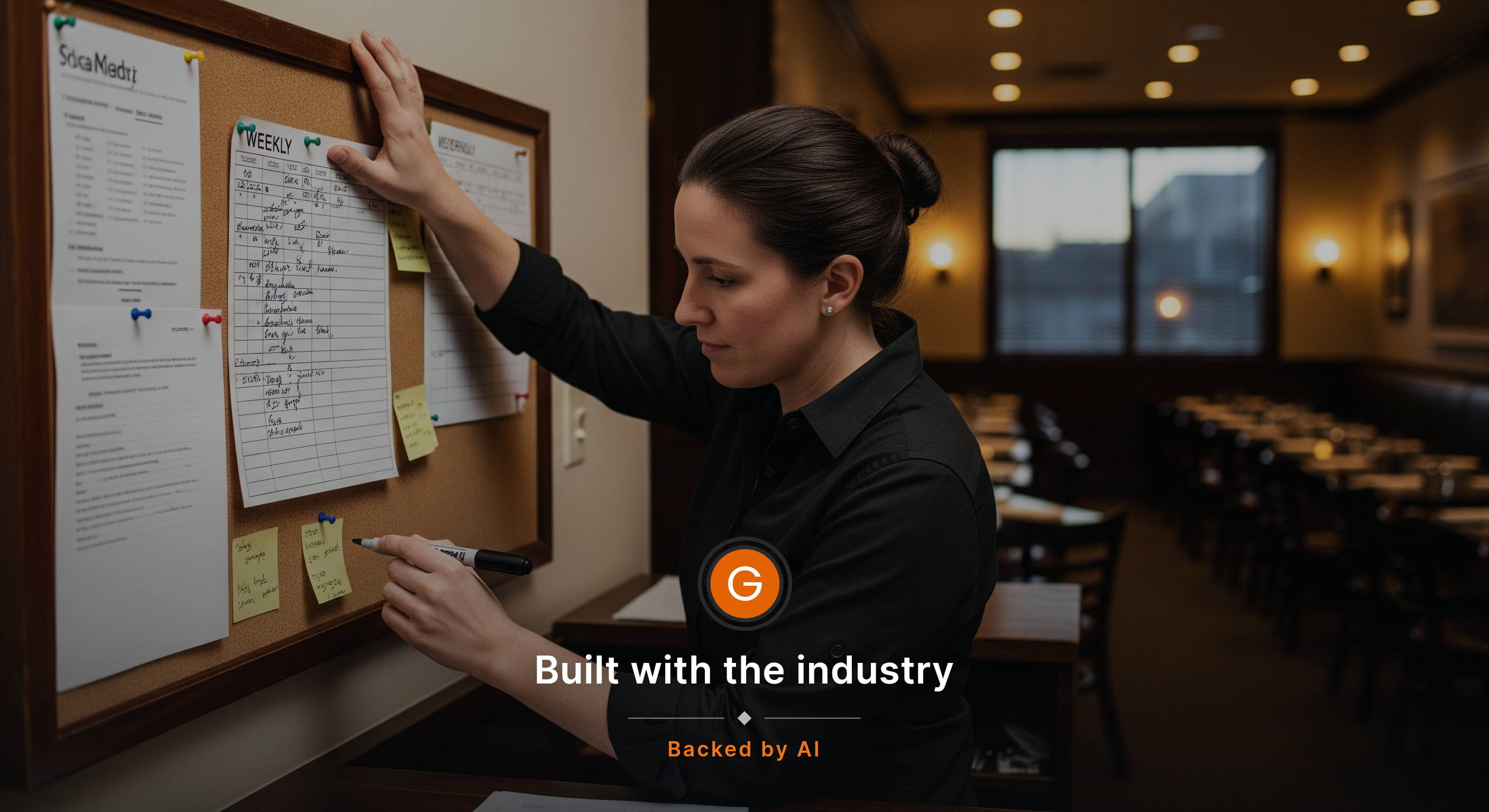
The schedule on the corkboard is where a leadership change becomes real. Not the press release, not the org chart, the actual grid with names crossed out, doubles circled, and one manager trying to explain why this week's plan already looks different from last week's.
That is why one number should change decisions this quarter. Gallup's 2024 State of the Global Workplace report says managers account for 70 percent of the variance in team engagement. In restaurants, that does not stay in a survey dashboard. It shows up in late cuts, shaky handoffs, uneven pre-shifts, and whether a new hire makes it to month three.
A leadership change matters only if it makes the shift more predictable for the people working it.
That is the lens worth bringing to a recent piece in Nation's Restaurant News, which reported in 2025 that James O'Reilly had been named CEO of the parent company for &pizza and Tijuana Flats, about eight months after Latitude Food Group was formed through the acquisition. That is a clean business update. On the floor, though, the real question is not who sits in the top seat. The real question is what gets steadier at store level because that seat changed hands.
That can sound small compared with private equity timelines, integration plans, and brand strategy. It is not small. It is the trade. When a parent company brings brands together, the temptation is to move fast on the visible stuff, menu architecture, unit economics, labor targets, reporting lines. Some of that is necessary. But the first proof of leadership is more basic. Did the opener get a cleaner pars sheet? Did the GM get one version of the labor expectation instead of three? Did the shift lead stop having to guess which standard still counts?
We have seen what happens when those answers are no. A bar manager tells the team to cut one server at 8:15 because labor is hot. At 8:40 the dining room gets hit, and the host is trying to stagger seating while two sections drown. The kitchen is not failing because the cooks forgot how to cook. The floor is not tense because the server suddenly stopped caring. The system above them created a whiplash night, and then everybody had to wear it in real time.
That is why the Gallup number matters here. Seventy percent is not an argument for hero managers. It is a warning that leadership choices travel downward through managers first, then through every station they touch. If the new CEO's priorities are clear, and if regional and store leaders can translate them into stable operating decisions, the team feels it as less confusion. If the priorities are muddy, contradictory, or constantly re-traded, the team feels that too, usually on a Friday.
There is another number operators should keep in view. The U.S. Bureau of Labor Statistics Job Openings and Labor Turnover Survey continues to show accommodation and food services among the highest-turnover sectors in the economy. Nobody on a restaurant floor needs a federal table to know turnover is expensive, but it helps name the scale of the problem. In a high-churn trade, any leadership move that adds ambiguity at the manager level multiplies the cost fast. You do not just lose efficiency. You lose training continuity, trust, and the quiet confidence that lets a team recover from a bad 20 minutes.
So what should operators hear in this moment? Not, be inspired by the appointment. Hear this instead, the new top job creates permission to stop sending mixed signals. If one brand in a group runs on rigid labor policing and another says guest recovery comes first, store leaders are left stitching together values mid-service. If the field team gets one message about speed and another about hospitality, hosts and shift leads become translators for contradictions they did not write.
That is where leadership principles either earn their keep or become wall language. The best ones do not sound lofty in the restaurant. They sound operational. We will not surprise managers with new scorecards mid-period. We will not ask for lower labor and higher staffing confidence without saying which matters more in a 7 p.m. rush. We will not roll out a new standard until training, scheduling, and accountability all match it. That is leadership too.
And to the floor, the line cook working sauté, the cashier taking the guest who wants three modifications, the host trying to calm a walk-in while the tablet keeps chirping, none of this is abstract. When senior leadership gets clearer, your day gets less stupid. Fewer reversals. Fewer last-minute policy edits. Fewer moments where you are doing exactly what yesterday's manager asked for and getting corrected by today's one. You still work hard. The rush still rushes. But the work stops fighting itself quite so often.
That is also why internal promotions and external hires should be judged less by charisma and more by whether they reduce operational drift. The floor does not need a savior. It needs fewer conflicting instructions, cleaner decisions, and a little more consistency between Monday's email and Saturday night's reality.
Leadership is not proven by the announcement, it is proven when the team stops having to reinterpret the plan every shift.
This week, stop changing store-level expectations faster than managers can coach them. If a standard is not important enough to hold steady for a full operating cycle, it is probably not ready to be pushed onto the floor yet.
Leadership
A marketing leadership change can look far away from the floor, until one guest order shows what mixed signals cost teams, trust, and repeat visits.
Leadership
Restaurants do not improve because headquarters says so. They improve when local leaders own the change and the system backs them clearly.