
Industry trends
Stop calling culture the growth strategy
Hospitality keeps treating culture as the engine of growth. The truer read is simpler: growth holds when standards, roles, and training stay clear.
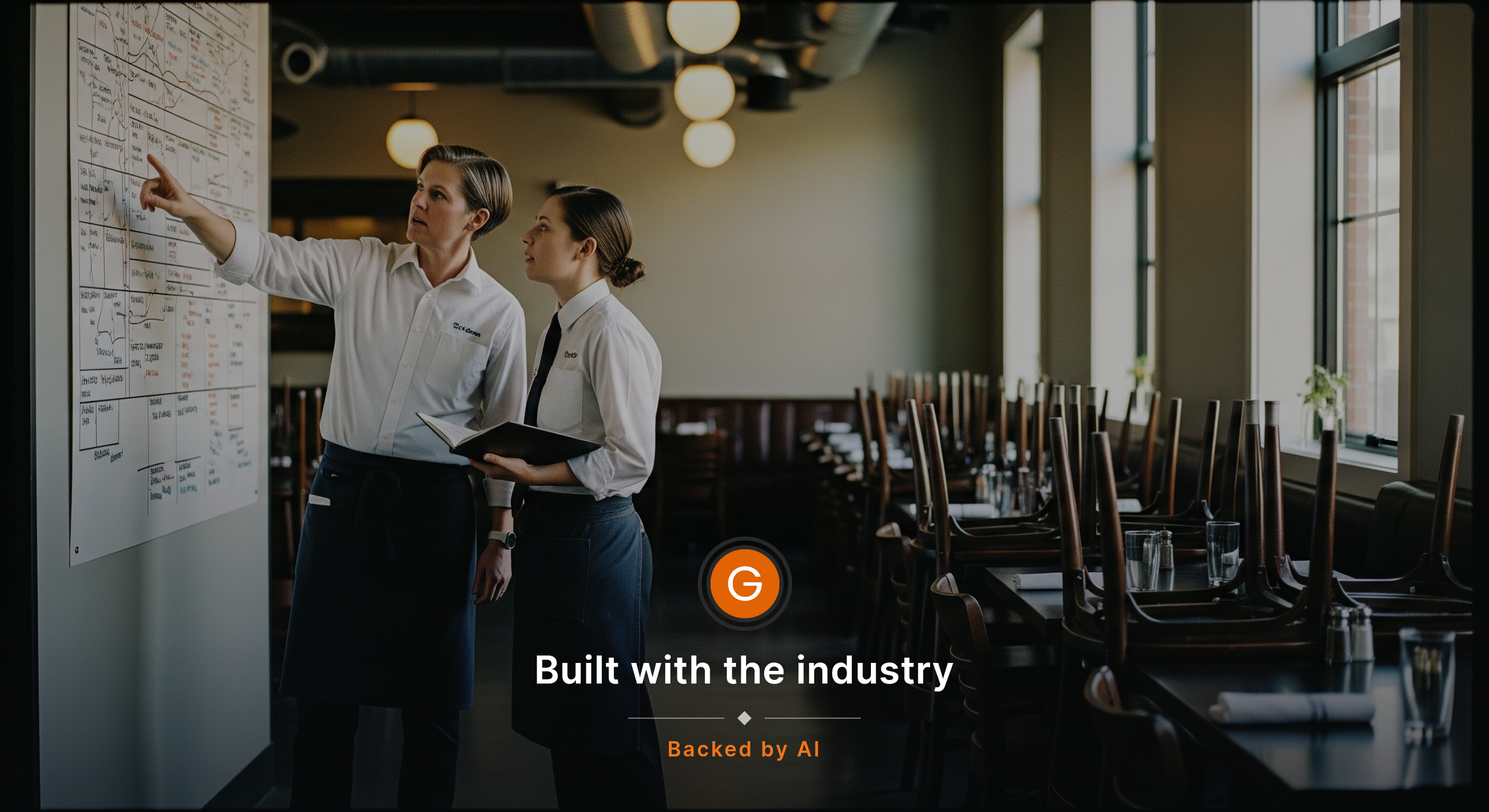
The schedule is still taped up from last week, corners curling, names crossed out and squeezed back in. Someone got pulled off prep to cover the door, someone else is staying two extra hours, and everybody can feel the same truth: the business is moving faster than the systems under it.
That is not unique to restaurants. A lot of industries are hitting the same wall. Demand is changing, supply chains are shifting, and operators are being asked to scale without letting the wheels come off. Growth only holds when the operating system beneath it can carry the weight.
A recent piece in McKinsey Insights makes that case through India’s auto component sector. McKinsey says the sector reached about $74 billion in FY24, with exports around $21.2 billion, and argues that electrification, supply-chain realignment, and premiumization are opening room for expansion through the next decade. It is automotive, not hospitality, but the underlying lesson is familiar to anyone who has watched a restaurant get busier, more complex, and less stable at the same time.
When trade picks up in a restaurant, we do not feel it first on a spreadsheet. We feel it in smaller break points. The lunch pop turns into a real rush. The Friday reservation book starts filling on Tuesday instead of Thursday. The host stand that used to be a one-person station now needs someone steady enough to manage the quote, the walk-ins, and the regular who wants the same table as always. Complexity arrives before people admit it has.
That is the part many growth stories skip. Expansion sounds exciting from a distance. On the floor, expansion means the old shortcuts stop holding. The opener who used to prep bar fruit and still have time to jump into takeout now cannot. The line cook who could carry grill and help with expo is now pinned to one station because ticket times are slipping. The manager who used to build a schedule in twenty minutes is suddenly doing payroll math, training, and conflict repair at midnight because the staffing model belongs to a quieter year.
Research from outside hospitality keeps landing on the same point. Gallup’s State of the Global Workplace reports that managers account for 70 percent of the variance in team engagement. On the labor side, the U.S. Bureau of Labor Statistics Job Openings and Labor Turnover Survey continues to show accommodation and food services among the highest-turnover sectors in the economy. Put those together and the message is blunt: when the operating environment gets harder, weak systems do not stay in the background. They become the whole shift.
That is where the McKinsey piece is more useful to restaurants than it might look at first glance. It is not only about auto parts. It is about what happens when an industry gets pulled forward by bigger forces, and operators have to decide whether they are going to treat that as a sales story or a systems story. Restaurants are living their own version of that every day. Guest expectations changed. Off-premise changed. Labor patterns changed. Cost pressure changed. In many markets, the old volume assumptions are gone, but the training plan, station design, and communication habits are still built for them.
We have all seen the floor version of this mistake. A place gets a strong month and reads it as proof that the model works. Then two people quit, one dishwasher calls out, a new host gets triple-seated into panic, and the whole room starts running on apologies. Not because the team does not care. Because demand outran the operating method. A good Saturday can hide a broken system for weeks. A bad one reveals it in twenty minutes.
The lever worth talking about is not hustle. Restaurants already have plenty of that. The lever is whether complexity has been translated into clear work. When covers rise, have sections been redrawn or did everybody just inherit more chaos? When menu mix changes, did training change with it or are servers improvising through guest questions? When takeout grows, did the handoff point move, or are bags still piling up where the host is also greeting a six-top? Growth punishes vagueness. Teams pay for it first.
So this part is for the floor. If you are the line cook who keeps catching the same garnish miss, the server who knows the patio section is overloaded, or the host who can tell in ten minutes that the quote system is nonsense, you are not wrong for noticing the pattern before leadership names it. The people closest to the work usually see system strain first. Not every problem can be fixed mid-shift, but naming the exact failure point matters. Not “we were slammed.” More like, “we had one person doing three handoffs,” or “the new closer never got shown the side-work order,” or “every eight-top hit one station because the sections were built for smaller parties.” That is how real fixes start.
And if you are the operator or manager reading this after close, the question is not whether your team can push harder. They probably already are. The question is where the business has sped up without the structure around it catching up. McKinsey’s read on India’s auto component sector is a reminder that favorable demand does not organize itself. If the trade is moving into a more complex phase, then scheduling logic, training cadence, station ownership, and communication rhythm have to move too.
When business accelerates, clarity has to accelerate faster.
The practical move this week is simple. Pick one recurring pressure point, pre-shift lineup, host handoff, takeout packaging, or close checklist, and rebuild it for the volume you actually have now, not the volume you had a year ago. One clean fix is not everything. But it is how a team stops surviving growth and starts carrying it.