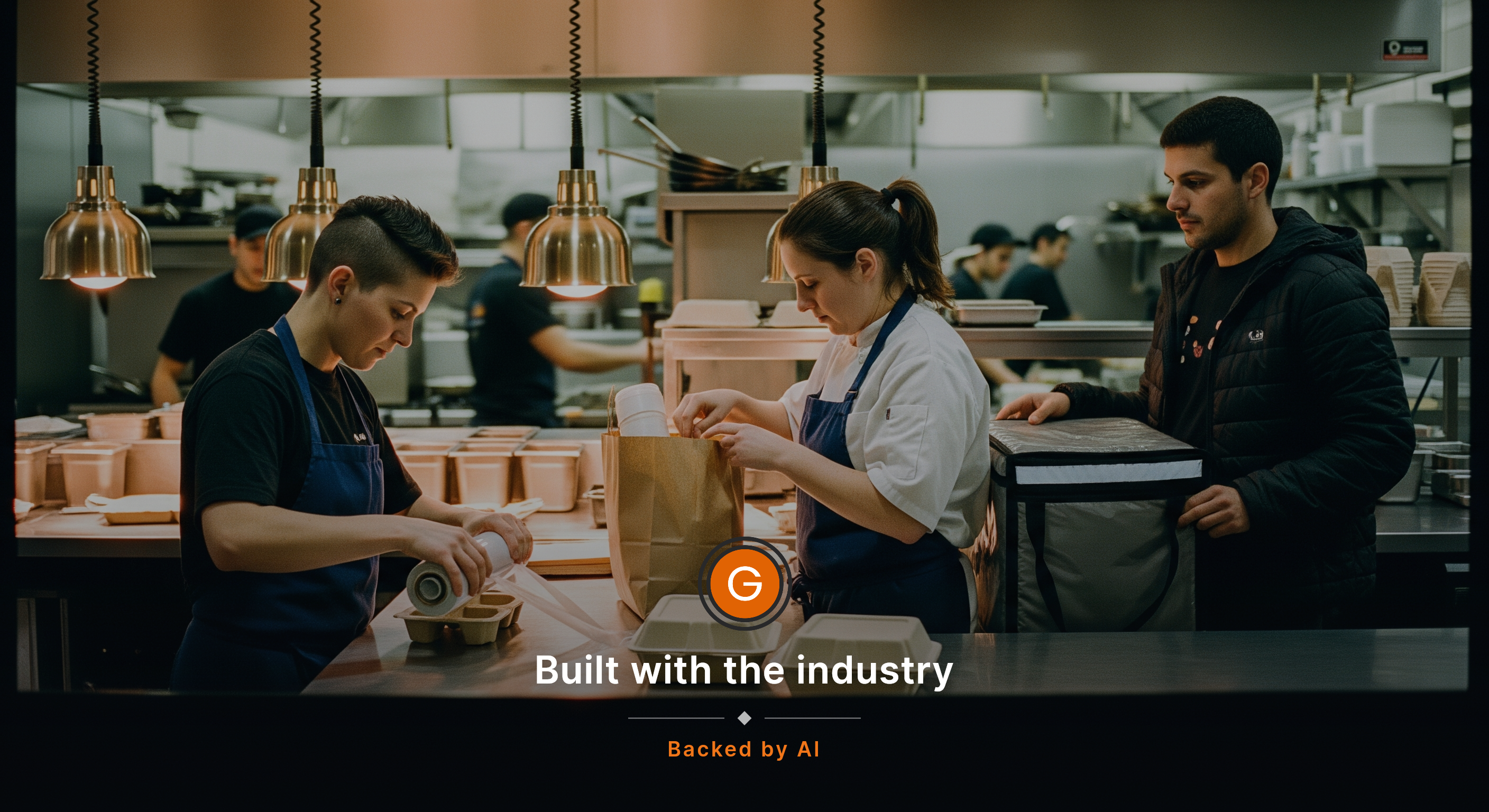
The bag station tells on the operation faster than almost anything else. Not the line, not the dining room, not the sales report the next morning. A stack of drinks waiting for seals, two hot bags cooling under the wrong heat lamp, a driver checking a phone while the fries lose their edge, and suddenly everybody can feel the gap between making food and getting food to a guest.
That gap matters more now because more restaurants are trying to serve guests without ever seeing them. A recent piece in Nation's Restaurant News reported that Chick-fil-A opened a ghost kitchen in Miami focused on core menu items delivered primarily through third-party platforms. The thesis is simple: delivery-only restaurants live or die at the handoff.
That is not just a catchy operations line. It is where the guest experience actually lands when there is no host stand, no server catch, no manager touching tables, and no bartender buying two extra minutes with a smile. Toast's 2024 ghost kitchen overview noted the model's appeal is lower overhead and delivery reach, but it also pointed straight at the friction, dependence on third-party delivery, tight margins, and intense competition. And Square's guide to restaurant profit margins reiterated a basic reality operators already know, margins in restaurants are notoriously thin, often around 3 percent to 5 percent. In a business that tight, a bad handoff is not a small miss. It is margin walking out the door in a soft bag.
Nation's Restaurant News covered the format move. What stands out from the floor side is what this kind of model asks the shift to become. In a traditional dining room, service has recovery points built into it. A server notices a ticket drag and buys time with bread. A manager comps a round when the kitchen gets buried. A busser resets a section and helps the room feel under control even when it is not. In a delivery-only setup, most of those save points disappear. The kitchen can cook perfectly and still lose the guest if the handoff is messy.
We have all seen some version of it. A strong fry cook is calling times cleanly. The sandwich build is right. Expo is moving. Then the wheels come off in the last six feet. The wrong sticker goes on the wrong bag. The drink carrier is short one item. The pickup shelf gets crowded and nobody knows which courier is here for which order. Somebody asks, "Was that the spicy or the regular?" and now the whole line is trying to solve a mystery while three more tickets print. That is not a people problem. That is a station design problem.
Ghost kitchens make that truth impossible to ignore. If delivery is the whole business, bagging is not side work. Expo is not just calling plates. Pickup timing is not a nice extra. Those are the front door, the dining room, and the last table touch rolled into one compressed system.
Gallup's State of the Global Workplace report has repeatedly made the same broader point about performance, the immediate environment shapes behavior more than posters or speeches do. On a restaurant shift, that means the station has to tell people what good looks like before a manager has to. Separate space for hot and cold. A fixed check for sauces, utensils, and sealed drinks. One owner for final bag verification. A pickup zone that stops drivers from reaching into the wrong order pile. Clean, boring, repeatable moves. That is the work.
For operators, this is the lever worth respecting. It is tempting to treat an off-premises kitchen like a simpler restaurant because there is no dining room labor and fewer guest-facing roles. But the labor did not disappear, it just moved downstream and got less forgiving. Someone still has to sequence production against courier arrival. Someone still has to decide whether a milkshake can survive the current board time. Someone still has to protect quality when the apps spike at the same moment. If nobody owns those calls in the shift design, the floor pays for it in refunds, remakes, and exhausted crews.
For the line cook, the server who moved to takeout, the host now handling pickup shelves, this matters too. If you have ever felt crazy because the food was right and the guest was still angry, you were probably standing inside a broken handoff. The last step is work. Real work. It asks for judgment, pace, and communication. It deserves the same seriousness as grill marks, ticket times, or section turns.
There is pride in getting this right, even though almost nobody claps for it. The bag is packed in the right order so the cold item stays cold and the hot item stays upright. The courier walks in and somebody can direct them without a scavenger hunt. The order leaves complete on the first pass. Ten minutes later, there is no ringing phone, no remake, no blame loop. Just a shift that stayed on its feet because the system held.
A lot of restaurant change right now is framed as format innovation, and some of it is. But on the ground, many of these moves are really tests of operational discipline. A smaller footprint does not excuse a looser pass. A digital order is still a guest. A bag handed to a driver is still service.
Delivery-only kitchens do not remove hospitality, they compress it into the handoff. The practical move this week is simple: stand at your takeout or pickup station for one full rush and watch only the final two minutes of every order. Count where orders stall, where items get rechecked, where drivers crowd the lane, and where hot food waits on cold components. Fix one of those breaks before next weekend. That is where the guest is meeting your operation now.